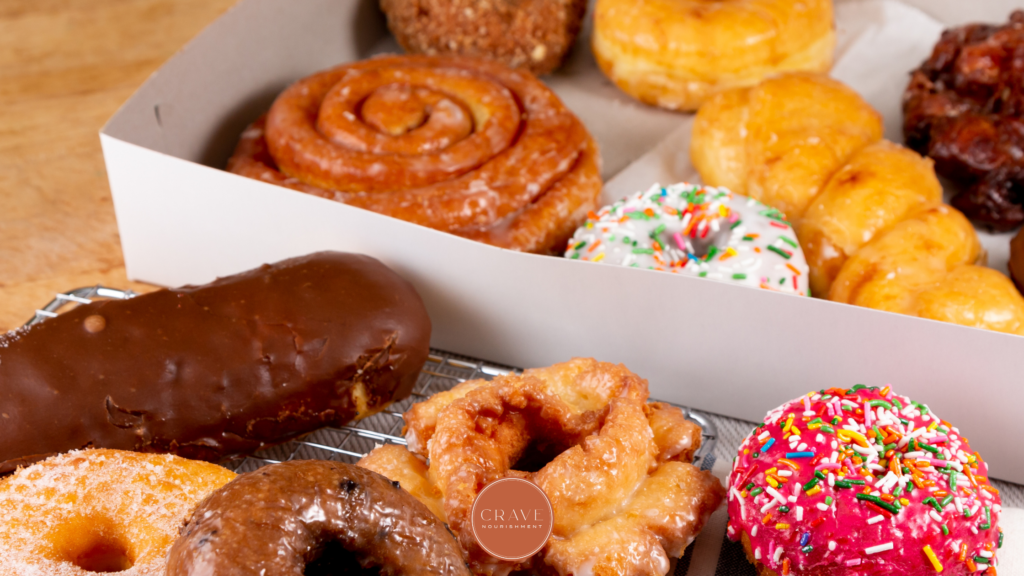
Do salty, sweet, and high-fat foods ever feel like they’re calling your name from the kitchen? You might not even be physically hungry, but suddenly you’re thinking about the chocolate in the pantry, the chips in the cabinet, or that leftover dessert sitting in the refrigerator. And the more you try to tell yourself you shouldn’t eat it, the more you seem to want it. The cravings can feel relentless!
Does this ever happen to you? If you answered yes, you’re not alone.
Food cravings are a very real struggle for many of the women I work with, and they can be especially frustrating when you’re working toward a health goal like managing lipedema, supporting metabolic health, reducing inflammation, or reaching a comfortable body weight.
But before you blame yourself, I want you to know something important. . . Your cravings aren’t a sign that you lack willpower.
There are real biological, hormonal, emotional, and environmental factors that can influence cravings. Understanding what’s behind them can help you stop fighting yourself and start working with your body.
Today, we’re breaking down what cravings really are, why they happen, and some practical strategies you can use to better manage them.
What Exactly Are Cravings?
We’ve all felt what it’s like to be hungry, but cravings often feel like something else altogether. Cravings go beyond a healthy appetite and instead feel more like an intense wave pulling you toward a very specific type of food.
Let’s break down the differences.
- Hunger is the feeling we get when our stomachs are empty (1).
- Appetite is the desire to eat food.
- Cravings are different. Harvard Health (2) defines cravings as “an intense urge to eat a certain food—ideally right away.”
While hunger can usually be alleviated by eating a variety of foods, cravings are often very specific. You might crave chocolate, donuts, pizza, chips, or ice cream. And cravings can pop up at almost any time. You can crave a certain food even if you just finished eating dinner and aren’t physically hungry at all.
This distinction is important because cravings aren’t necessarily a sign that you’ve done something wrong. They’re a signal influenced by many different factors, and the more we understand those factors, the better equipped we are to respond to them.
What Causes Cravings?
Cravings can be brought on by several biological factors, including hormones and other physiological processes, as well as environmental cues and emotional factors. All of these things can influence how often you experience cravings and how strong they feel.
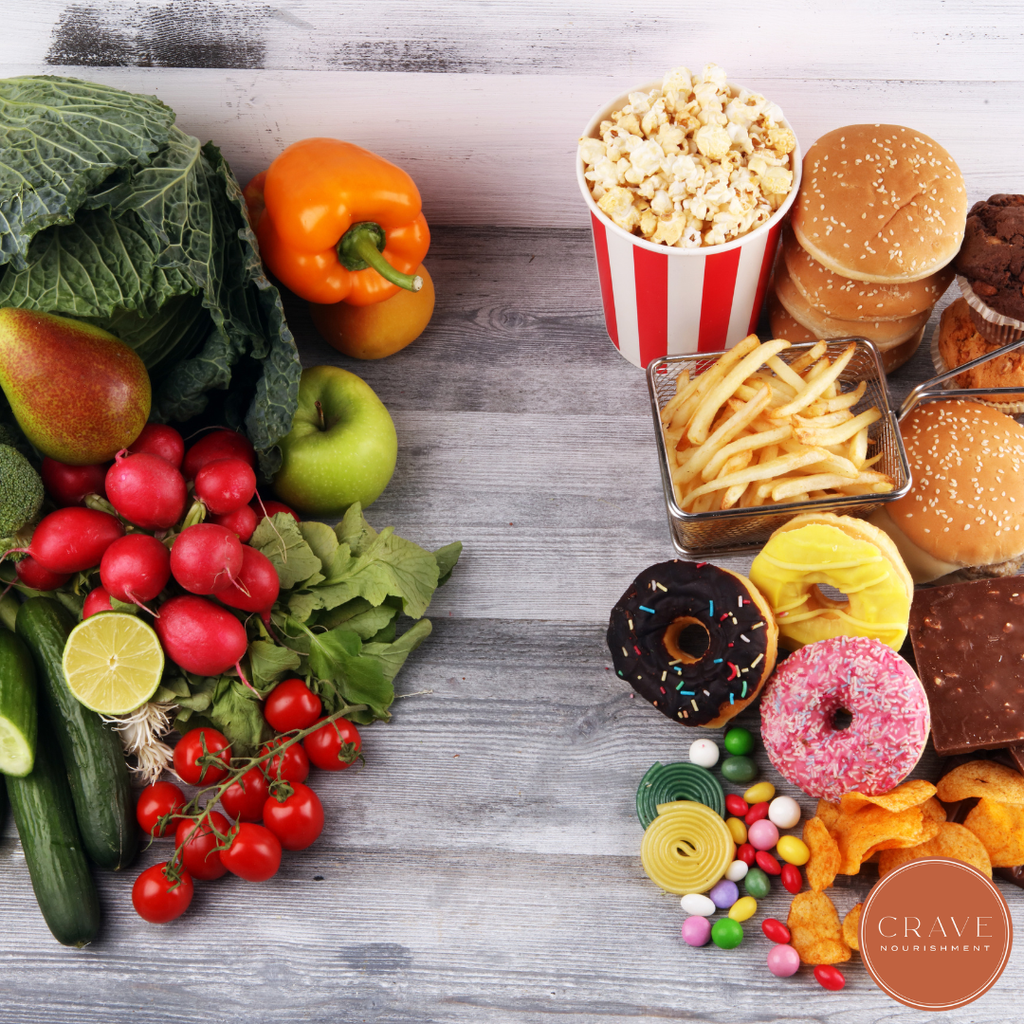
Food cravings are often directed toward sweet, salty, or fatty foods. And they’re much more complicated than simply having a “sweet tooth” or not having enough self-control. There are several physiological causes of cravings, and many of them are influenced by processes that happen automatically in the brain and body.
The good news is that food cravings are not your fault, a sign of weakness, or evidence that you lack willpower.
This is especially important to remember if you’re living with lipedema! If you’ve spent years being told that your body would be different if you just ate less, exercised more, or had more discipline, it can be incredibly easy to internalize the idea that every craving is something you need to overcome.
But lipedema is not a failure of willpower.
It’s also important to remember that your overall health isn’t determined by whether you can perfectly resist every craving. Instead, we want to understand what may be driving those cravings so you can make informed choices and build habits that support your health over the long term.
Common Causes of Cravings
Let’s talk about some specific craving triggers. You may recognize a few of these in your own life.
Brain Signals
When you eat something delicious, your brain responds to that experience by releasing chemicals, including dopamine, that are involved in pleasure and reward.
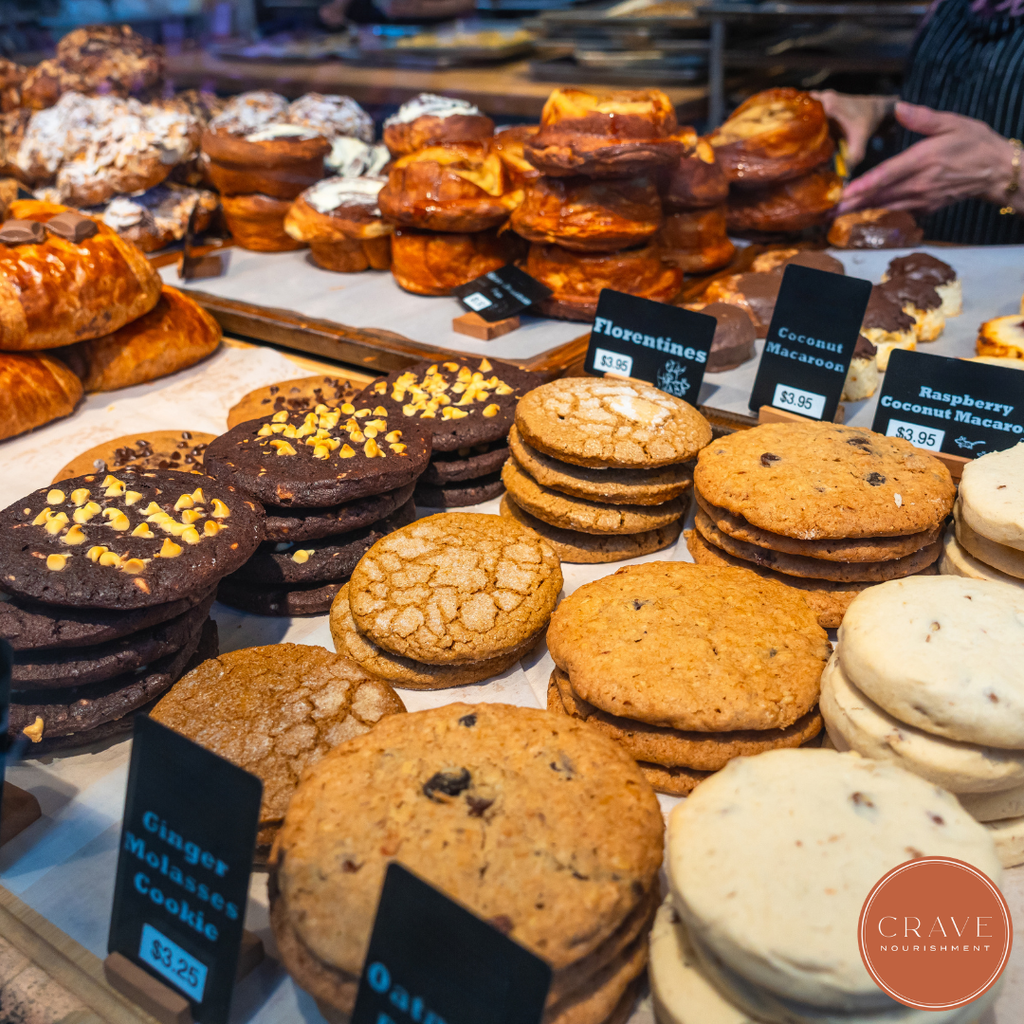
Over time, your brain can begin to associate certain foods with that rewarding experience. Then, the next time you see, smell, or encounter that food, those learned associations can contribute to a craving.
Think about walking into a bakery and smelling freshly baked cookies. You may not have been thinking about cookies five minutes earlier, but suddenly you really want one. That response isn’t simply a lack of self-control. Your brain has learned to associate that smell, environment, or food with a rewarding experience.
This is sometimes referred to as a “pleasure trap,” because those reward pathways can reinforce our desire to seek out foods that we find particularly enjoyable.
Hormones
Hormones also play an important role in hunger, appetite, and food intake.
- Ghrelin, sometimes referred to as the hunger hormone, is involved in signaling hunger and can influence food intake.
- Leptin, on the other hand, plays an important role in appetite regulation and energy balance.
Your body has an incredibly complex system of signals that helps regulate when you eat and how much energy you need. This is one reason why I don’t want you to think of cravings as something you simply need to “fight.” Your body is constantly communicating with you.
Learning to recognize those signals can be much more helpful than constantly trying to override them.
Emotions and Stress
This is a big one! Emotional factors can significantly contribute to cravings, and this includes both positive and negative emotions.
Think about birthday celebrations. You associate the celebration with positive emotions, and what else is almost always there? Birthday cake!

Over time, these experiences can create strong associations between certain foods and certain emotions or situations.
Stress and negative emotions can also trigger a desire for comfort foods.
Think about the last time you had a really difficult day at work. Maybe you wanted a glass of wine, some chocolate, takeout, or your favorite comfort food when you got home.
If you’ve experienced this, you’re not alone. When you’re already dealing with the physical and emotional challenges that can come with lipedema, chronic stress can make taking care of yourself feel even harder.
There’s another piece of this that I don’t want you to overlook: negative self-talk.
If you’re constantly beating yourself up about your food choices, your body, or your ability to stick to your goals, that can add even more stress to the situation. The cycle can become:
I shouldn’t eat this → I really want it → I ate it → I feel guilty → I need to be stricter tomorrow.
That cycle doesn’t create a healthy relationship with food. You don’t need more guilt. You need strategies that help you understand what’s happening.
Environmental Cues
Finally, we can’t forget about your environment. Sight, smell, and social situations can all trigger cravings. The sight of a dessert table at a party or the smell of freshly baked bread can make you crave certain foods almost immediately.
Even routines can become environmental cues. Maybe you always have something sweet while watching television at night. Eventually, sitting down to watch your favorite show may trigger the desire for that food even if you aren’t hungry.
An important factor in managing these types of cravings is self-awareness.
Start noticing what types of situations, foods, emotions, or routines tend to trigger strong cravings for you. You don’t need to obsessively track everything you eat. Simply becoming more aware of your patterns can give you valuable information.
What Can We Do About Cravings?
So, is all hope lost? Are we doomed to deal with cravings forever? Absolutely not! There are plenty of ways to reduce and manage cravings. But I want to make one important distinction here. The goal isn’t to eliminate every craving or to become someone who never wants dessert, chips, or pizza.
Food is about more than nutrients. Food is also part of celebrations, traditions, connection, enjoyment, and everyday life. When you’re managing lipedema, I don’t want you caught up in another cycle of restriction and guilt.
Instead, the goal is to understand your cravings and develop strategies that help you respond to them intentionally.
Before trying to “curb” a craving, it can be helpful to ask yourself a few questions:
- Am I actually hungry?
- When was the last time I ate?
- Have I been eating enough throughout the day?
- What was happening right before this craving appeared?
- Am I stressed, tired, bored, or looking for comfort?
- Is there a specific food, smell, situation, or routine triggering this craving?
These questions can help you understand what’s really going on instead of immediately assuming that you need more willpower. The first few times you do this, I highly recommend writing it down. Going back and reading these questions and answers can be monumental in making changes!
Strategies to Conquer Cravings
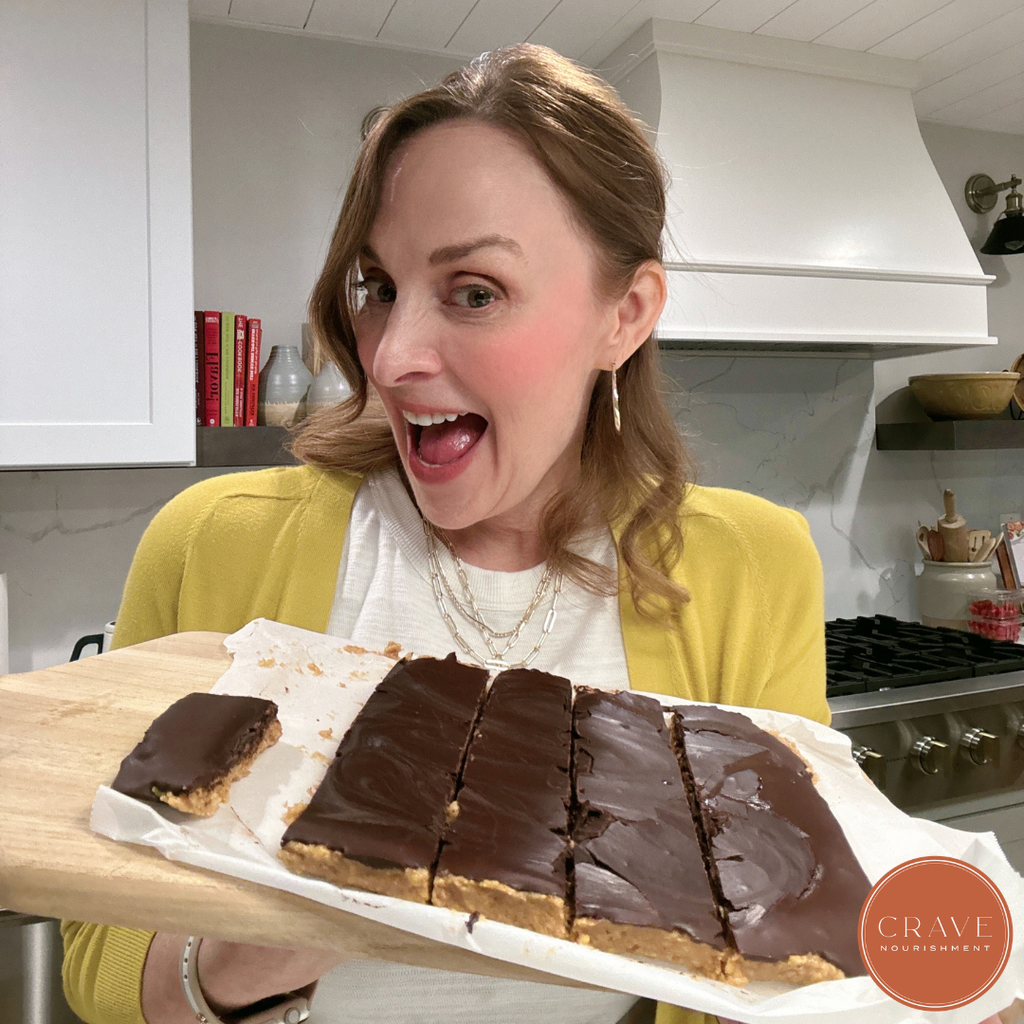
Once you understand some of your personal craving triggers, you can start experimenting with strategies that work for you. For many women, that may mean making sure meals are satisfying and contain enough protein and fiber. For myself, this is certainly true! I also prioritize having some healthier treats on hand for those moments when I really want “a little something” but don’t want to compromise my health goals.
For others, it may mean addressing stress, getting more consistent sleep, breaking an automatic food routine, or simply creating a little space between experiencing a craving and acting on it.
Sometimes you may decide that you really do want the food you’re craving. And that’s okay, too! Managing cravings doesn’t mean you have to say no to every food you enjoy. It means learning to make choices without feeling like food is completely in control.
If you’re working on your health while managing lipedema, that bigger-picture approach matters. Your health isn’t determined by one cookie, one restaurant meal, or one evening snack. It’s built from the patterns you create over time.
Want Help Understanding Your Cravings?
If you’re interested in learning more about what may be driving your cravings and creating a personalized plan to manage them, I have a special treat for you!
Click here to grab my FREE mini-training: CRAVINGS CONTROL!
You’ll get a cheat sheet to help you remember what causes cravings, along with a list of practical strategies to help you manage them. You’ll even get journal prompts and reflection questions to help you create your very own personalized plan to conquer your cravings.
If you’re tired of feeling like you just need more willpower, I hope this gives you a different perspective.
You don’t need to fight your body. You need to understand it. And you certainly don’t have to figure it all out alone.
References
- Meule A. (2020). The Psychology of Food Cravings: the Role of Food Deprivation. Current nutrition reports, 9(3), 251–257. https://doi.org/10.1007/s13668-020-00326-0
https://www.ncbi.nlm.nih.gov/pmc/articles/PMC7399671/ - Harvard T. H. Chan School of Public Health. (2021, April). Cravings. The Nutrition Source. https://www.hsph.harvard.edu/nutritionsource/cravings/