If you live with lipedema, chances are you’ve spent a lot of time thinking about the best diet or what you should eat. Maybe you’ve tried keto, PAELO, low-carb, intermittent fasting, or one of the countless other approaches you’ve heard about online. Maybe you’ve been told that this is the best diet for lipedema, only to find yourself frustrated when it doesn’t work the way you hoped.
And then there’s the inevitable question… what’s the best diet? I think it’s time we start asking a different question. Instead of constantly searching for the perfect diet or the right set of food rules, what if we started learning how to understand our own bodies?
When it comes to nutrition and lipedema, there isn’t a single approach that works perfectly for every woman. And letting go of the labels we’ve attached to food can be an important first step toward finding a healthier, more sustainable relationship with nutrition.
How Diet Culture Keeps Us Stuck
Think about some of the labels you’ve probably heard over the years.
- Keto.
- Low-carb.
- Clean eating.
- Sugar-free.
- “Good” foods. “Bad” foods.
These labels can seem helpful at first. Having a set of rules can make eating feel simple. You know what you’re supposed to eat, what you’re supposed to avoid, and what happens when you follow the plan.
The problem is that these labels can quickly create an all-or-nothing mindset.
You’re either “on” your diet or “off” your diet. You’re either being “good” or you’ve “blown it.” You eat something that wasn’t part of the plan, and suddenly you feel like you’ve failed.
Maybe you tell yourself you’ll start again Monday. Then Monday becomes next week. Next week becomes next month. And eventually, January becomes the next opportunity to start over.
If you’ve lived in this cycle, you’re certainly not alone. Many women (including myself at one point) have spent years believing that the answer to their health struggles is simply finding enough discipline to follow the right diet.
But what if the problem isn’t that you haven’t found the right diet yet?
What if you’ve been looking for a diet when what you really need is a deeper understanding of your own body?
Lipedema Doesn’t Come With One Perfect Diet
This is particularly important for women with lipedema.
There is a growing body of research looking at nutrition, inflammation, metabolic health, body composition, and lipedema. But that doesn’t mean we’ve discovered one magical eating pattern that every woman with lipedema needs to follow.
And your personal experience matters, too.
One woman may feel significantly better when she reduces carbohydrates. Another may find that she feels and functions well with a moderate amount of carbohydrates. Someone else may discover that certain foods seem to trigger digestive symptoms or make her feel worse, while those same foods aren’t problematic for someone else.
This is why I don’t believe in handing every woman with lipedema the exact same list of foods and calling it a personalized nutrition plan.
Your body isn’t exactly like anyone else’s. Your health history is different. Your lifestyle is different. Your preferences are different. Your metabolism, hormones, activity level, symptoms, and individual responses to food are different.
So why would we expect your nutrition to look exactly like someone else’s?
You Don’t Have to Make Carbohydrates (Or Any Food) the Enemy
This is an important one to note for women with lipedema. Carbohydrates are a perfect example of how diet culture can create unnecessary fear around food.
You may have heard that you have to eliminate carbohydrates to lose weight or manage lipedema. Maybe you’ve been told that keto is the only approach worth trying. Perhaps you’ve spent years feeling guilty for eating bread, potatoes, fruit, or other carbohydrate-containing foods.
But carbohydrates aren’t simply “good” or “bad.”
The amount and type of carbohydrate you eat, what you eat alongside it, your overall dietary pattern, and your individual metabolic response can all matter. For some women, reducing carbohydrates may be a useful strategy. For others, a less restrictive approach may be a better fit.
The point I’m making here isn’t that everyone should eat carbohydrates. The point is that you shouldn’t automatically assume you have to eliminate them simply because someone else told you that’s the only way to manage lipedema.
Instead, we can ask better questions.
- How does this food make me feel?
- How does this type and amount of carbohydrate fit into my overall nutrition?
- How does my body respond?
- Does this approach give me enough flexibility to actually sustain it?
Those questions move us away from diet rules and toward understanding.
Healthy Eating Should Fit Into Your Life
There’s another reason I’m passionate about letting go of diet labels.
Your nutrition has to work in real life.

It’s easy to follow a perfect plan when everything is going exactly as planned. You have groceries in the refrigerator, plenty of time to cook, your schedule is predictable, and you’re feeling motivated.
But that’s not most people’s lives. I know my own life certainly isn’t like that!
Real life includes vacations, birthdays, holidays, restaurant meals, busy workdays, family gatherings, and nights when you’re simply too tired to cook.
If your nutrition plan only works when everything is perfect, it isn’t really supporting you for the long term.
I don’t want women with lipedema to feel like they have to choose between taking care of their health and enjoying their lives. Food is part of our celebrations and our relationships. Sitting around a table with people we love is part of life.
That doesn’t mean every food choice needs to be made without consideration for your health. It means we can learn to make intentional choices without turning every meal into a test of whether we’re being “good” or “bad.”
For me, this shift was incredibly important.
I spent years caught in the cycle of dieting and starting over. True change began when I stopped looking for the next diet and started thinking about how I could create a life that I actually wanted to live.
For me, that meant finding a way to feel my best while still enjoying food, relationships, and life. That change eventually helped me lose 180 pounds naturally and feel better than I did in my 20s.
It wasn’t about finding another set of perfect rules. It was about learning what worked for me.
This Is Why I Created The Lipedema Method
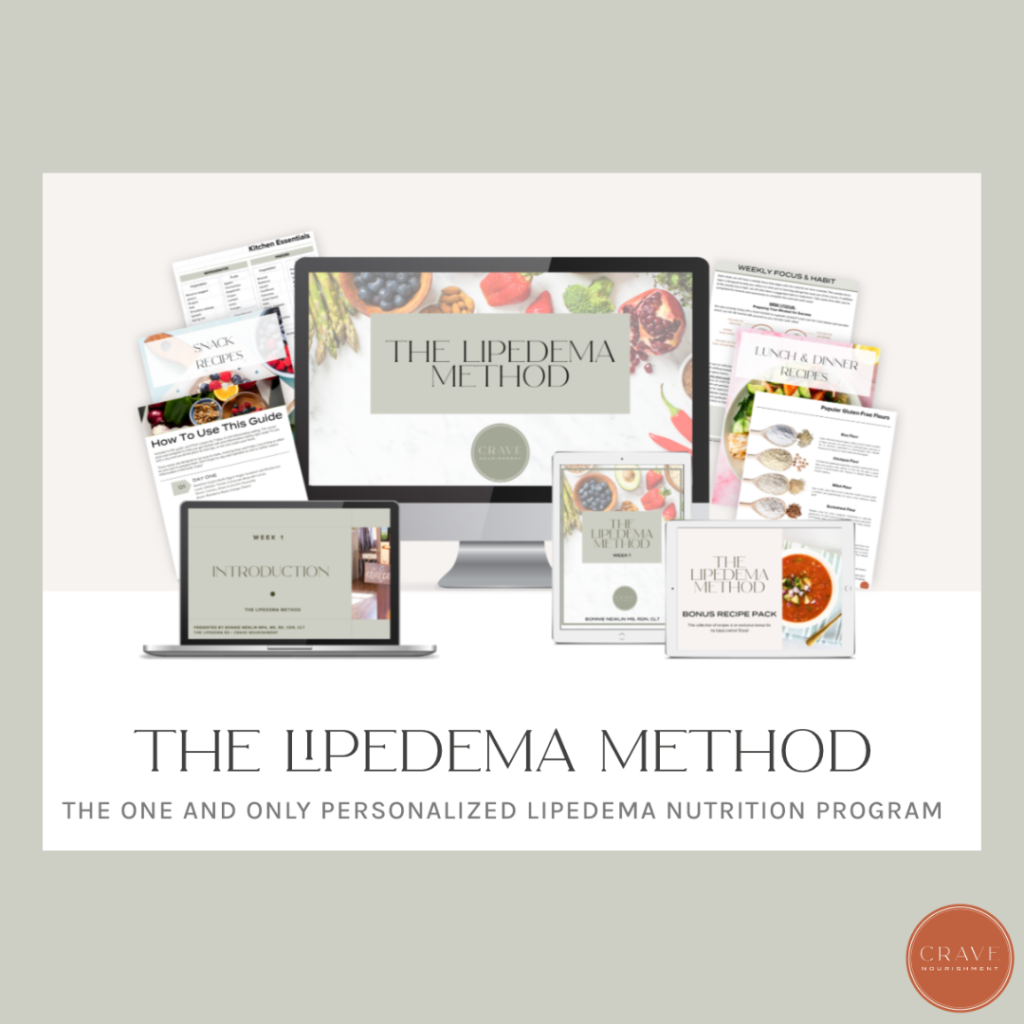
This philosophy is at the heart of The Lipedema Method, my 15-week digital course created to help women with lipedema better understand their bodies, nutrition, inflammation, and the many factors that can influence how they feel.

I didn’t create The Lipedema Method to give women another restrictive diet to follow.
I created it because I know how confusing it can be to navigate lipedema while being bombarded with conflicting nutrition advice.
Inside the program, we look at the research and break down the information so you can better understand what it actually means for you. You’ll discover evidence-based nutrition information, learn more about the latest research surrounding lipedema, and explore ways nutrition may support symptom management.
You’ll also have the opportunity to discover your own potential inflammatory triggers and explore your body’s unique needs through personalized DNA testing and optional tailored testing.
But information is only part of the process.
I also want you to develop the confidence to become your own health advocate. Instead of constantly looking outside yourself for someone to tell you exactly what to eat, you’ll learn how to ask better questions, understand your options, and make informed decisions alongside your healthcare team.
The Lipedema Method also includes supplemental materials, group education calls, bonus guides, membership in the Lippy Lady Lounge, and additional support designed to help you take what you’re learning and apply it to your everyday life.
You Don’t Need More Diet Rules
After years of working with women with lipedema, one of the things I want most for them is freedom from the constant noise surrounding food.
You don’t need another person telling you that their diet is the only answer, or to feel guilty because you ate something that wasn’t on a particular list.
You don’t need to start over every Monday, or to believe that someone else’s success automatically means their approach is right for your body.
- What you do need is good information.
- You need to understand the science.
- You need to learn how to recognize your own body’s responses.
- And you need the confidence to make choices based on your individual needs rather than fear, guilt, or the latest diet trend.
That doesn’t mean you’ll never make changes to the way you eat. In fact, learning about your body may lead you to make some very meaningful changes. But there’s a big difference between making an informed choice and following a rule because someone told you that you have to.
Your Body Deserves a Personalized Approach
There is no one-size-fits-all approach to nutrition or lipedema management.
That’s why I encourage you to start moving away from the question, “What diet should I follow?”
Instead, ask yourself:
- “What does my body need?”
- “What helps me feel my best?”
- “What can I realistically sustain?”
- “What does the research tell me?”
And perhaps most importantly, “Am I making this choice because it supports my health, or because diet culture has told me I should?”
Those questions can change the way you think about food.
You are not a success or failure based on whether you followed a diet perfectly. Your worth isn’t determined by the number on the scale, the foods on your plate, or whether you managed to stick to someone else’s rules.
You are a woman with a unique body that deserves to be understood. That is really the heart behind The Lipedema Method.
My goal is to help you move beyond the diet noise, understand your individual needs, and gain the knowledge and confidence to take a more empowered approach to living with lipedema.
Trust me… that is a journey worth taking.