
As a woman living with lipedema, you have likely explored a wide range of nutritional approaches in an effort to manage your symptoms. From anti-inflammatory diets to carbohydrate restriction and various elimination protocols, many of these strategies are often presented as universal solutions. Yet despite your efforts, you may have found that results are inconsistent, short-lived, or simply do not address the full scope of what you are experiencing. This is not a reflection of a lack of discipline or commitment. Rather, it highlights a fundamental gap in how nutrition is often discussed in relation to lipedema.
Today, let’s close that gap and get real about 5 things I wish I knew a long time ago about lipedema.
The Complexities of Lipedema Management

Lipedema is a complex condition that extends far beyond fat accumulation. It involves:
- hormonal influences
- alterations in lymphatic function
- changes within the connective tissue and extracellular matrix
- disruptions in metabolic and cellular energy processes
Each of these systems plays a role in how the body responds to nutrition, and each requires a more nuanced and targeted approach than standard dietary recommendations typically provide.
When these underlying mechanisms are not taken into account, even well-intentioned nutrition plans can fall short. However, when you begin to understand how these systems interact, a clearer and more effective path forward starts to emerge.
The following five principles highlight key areas that are often overlooked in traditional nutrition guidance, yet are highly relevant for women navigating lipedema.
1. Eat for Lymphatic Health
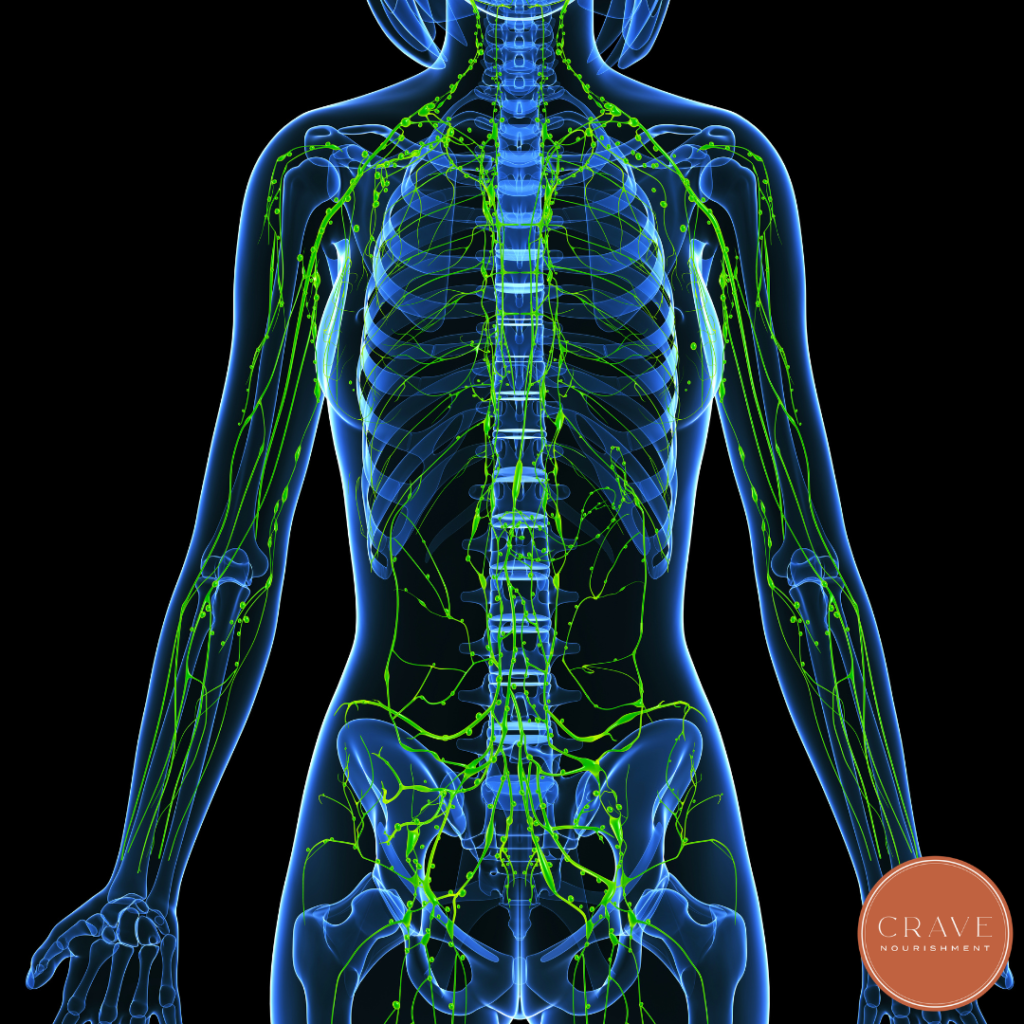
One of the most overlooked aspects of lipedema nutrition is the role of the lymphatic system.
Your lymphatic system is responsible for fluid balance, immune function, and the transport of waste products out of tissues. Unlike the cardiovascular system, it does not have a central pump. It relies on movement, hydration, breathing patterns, and muscle contractions to function effectively.
Nutrition can support this system by focusing on hydration status, anti-inflammatory food patterns, and nutrients that help reduce oxidative stress and support healthy fluid balance.
When lymphatic health is considered as part of your nutrition plan, many women notice improvements in how they feel day to day, even when visible changes are slower to occur.
2. Support the Extracellular Matrix
The extracellular matrix (ECM) is the structural network that surrounds and supports your cells. In lipedema, changes in connective tissue and ECM structure may contribute to symptoms such as fibrosis, tissue stiffness, and altered fluid movement.
Nutrients that support collagen formation, reduce inflammation, and promote tissue repair play an important role here. This includes adequate protein intake, vitamin C, and overall nutrient density.
Supporting the ECM is not about a single food or supplement. It is about consistently providing the building blocks your body needs for tissue integrity and repair.
3. Mitochondria Can Trigger the Fatigue Factor

Mitochondria are often called the “powerhouses” of your cells because they are responsible for producing energy. Every movement, every thought, every cellular process depends on them working efficiently.
In lipedema, many women report persistent fatigue that doesn’t always match sleep, activity level, or lifestyle habits. While fatigue is multi-factorial, emerging research suggests that mitochondrial function may play a role in how energy is produced and utilized in the body.
When mitochondria are under stress, energy production becomes less efficient, which can contribute to feelings of low energy, slower recovery, and overall fatigue.
Supporting mitochondrial health isn’t about a single supplement or quick fix. It involves consistent support through nutrient-dense foods, blood sugar stability, adequate protein intake, movement, and reducing oxidative stress.
4. The Estrobolome Connection
The estrobolome refers to the collection of gut bacteria that influence how estrogen is metabolized and recycled in the body.
This is especially relevant in lipedema, where hormonal influences appear to play a role in symptom expression and progression. The gut and hormone systems are closely connected, and the balance of gut bacteria can affect how estrogens are processed and eliminated.
When the estrobolome is functioning well, estrogen metabolism tends to be more efficient. When it is disrupted, estrogen recycling and clearance may be affected, which can contribute to hormonal imbalance over time.
Supporting a healthy gut environment through fiber-rich foods, diverse plant intake, and gut-supportive nutrition strategies can help promote better microbial balance and overall hormonal health.
5. Blood Sugar Stability Protects Connective Tissue

Blood sugar stability plays an important role in overall metabolic health, but it may also be relevant for connective tissue integrity.
Frequent blood sugar spikes and crashes can increase inflammatory signaling in the body, which may contribute to changes in tissue health over time. In a condition like lipedema, where connective tissue structure is already affected, this becomes especially important.
Supporting steady blood sugar levels through balanced meals that include protein, fiber, and healthy fats can help reduce metabolic stress on the body.
This isn’t about strict carb elimination. It’s about creating a steady internal environment that supports energy, reduces inflammation, and helps protect connective tissue over time.
The Information I Wish Someone Had Shared With Me

If you are feeling stuck, confused, or like nothing has quite worked the way you hoped, you are not alone. This is exactly why I created my free guide: 5 Things I Wish I Knew About Lipedema a Long Time Ago
Inside, I break down the 5 key principles that traditional nutrition advice often overlooks, and show how they fit into the bigger picture of lipedema.
This is the kind of information I wish I had years earlier in my own journey. It will not give you a quick fix. But it will help you start connecting the dots in a way that finally makes sense.
Get Your Free Guide
If you are ready to move beyond guesswork and start understanding your body with more clarity, grab your free guide right here! Because once you understand what your body has actually been responding to, everything starts to shift.
REFERENCES
Wolf S, Rannikko JH, Virtakoivu R, Cinelli P, Felmerer G, Burger A, Giovanoli P, Detmar M, Lindenblatt N, Hollmén M, Gousopoulos E. A distinct M2 macrophage infiltrate and transcriptomic profile decisively influence adipocyte differentiation in lipedema. Front Immunol. 2022 Dec 20;13:1004609. doi: 10.3389/fimmu.2022.1004609. PMID: 36605202; PMCID: PMC9809281.
Santella B, Salvati A, Papp A, D’Ursi A, Memoli D, Mingo M, Pulai C, Marino C, Rastrelli L, D’Elia M, Nassa G, Schiavo L. Epigenetic alterations of AKT1 orchestrate a metabolic reprogramming in advanced lipedema: translational insights from an integrated multi-omics study. J Transl Med. 2026 Jan 24;24(1):265. doi: 10.1186/s12967-026-07726-w. PMID: 41580786; PMCID: PMC12911300.
Kruglikov IL, Scherer PE. Is the endotoxin-complement cascade the major driver in lipedema? Trends Endocrinol Metab. 2024 Sep;35(9):769-780. doi: 10.1016/j.tem.2024.04.004. Epub 2024 Apr 29. PMID: 38688780; PMCID: PMC11387139.